This was just released today so I am starting it this evening:
Missoula: Rape and the Justice System in a College Town - Synopsis
In Missoula, Krakauer chronicles the searing experiences of several women in Missoula — the nights when they were raped; their fear and self-doubt in the aftermath; the way they were treated by the police, prosecutors, defense attorneys; the public vilification and private anguish; their bravery in pushing forward and what it cost them.
Some of them went to the police. Some declined to go to the police, or to press charges, but sought redress from the university, which has its own, non-criminal judicial process when a student is accused of rape. In two cases the police agreed to press charges and the district attorney agreed to prosecute. One case led to a conviction; one to an acquittal. Those women courageous enough to press charges or to speak publicly about their experiences were attacked in the media, on Grizzly football fan sites, and/or to their faces. The university expelled three of the accused rapists, but one was reinstated by state officials in a secret proceeding. One district attorney testified for an alleged rapist at his university hearing. She later left the prosecutor’s office and successfully defended the Grizzlies’ star quarterback in his rape trial. The horror of being raped, in each woman’s case, was magnified by the mechanics of the justice system and the reaction of the community.
Krakauer’s dispassionate, carefully documented account of what these women endured cuts through the abstract ideological debate about campus rape. College-age women are not raped because they are promiscuous, or drunk, or send mixed signals, or feel guilty about casual sex, or seek attention. They are the victims of a terrible crime and deserving of compassion from society and fairness from a justice system that is clearly broken.
Once their mind has been made up, confirmation bias sets in. Confirmation bias is simply our tendency to more readily, and with less scrutiny, accept information, anecdotes, and world views that confirm our existing beliefs. And, again, it is a completely normal thing that every person does. Indeed, trying to convince someone that a previously held belief is incorrect has been proven to actually increase their affinity for that idea. And so a community is born, and the safety of vaccines is called into question. And once the procedure for getting a vaccine goes from the doctor telling you that it is now time for a vaccine — and 99% of parents agreeing because that person went through medical school — to it being a question to ponder, vaccination rates will go down.
I am taking my wife on a Babymoon in April to the Florida Keys after finding an amazingly priced flight last night. I was up until almost 4 in the morning reading, booking a resort, and seeing what we can get into down there. I love to travel. I also really love to read guidebooks about where we’re going. I use them to choose things to do while we’re there, find neat little places to eat, and find hidden beaches, authentic experiences, and off-the-beaten-path places.
So, I added a few books to Calibre and pushed them to my Voyage to read over the next weeks including:
Via Slate. Jana Romanova photographed 40 couples, one for each week of pregnancy, over a two year span in Russia for her series “Waiting.”
She started her series by photographing her friends sleeping early in the morning in their bedrooms—a time, as she wrote on her website, “when people don’t really care about their appearance and one can see their attitude to each other and to this life that is growing inside their family.”
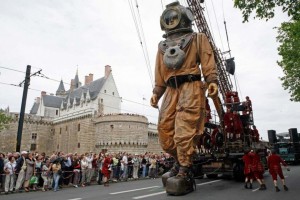
“Each giant, built with light and flexible poplar wood, is controlled on a system of hydraulic pulleys and levers by 20 to 40 members of the Royal de Luxe troupe, called Lilliputians.”
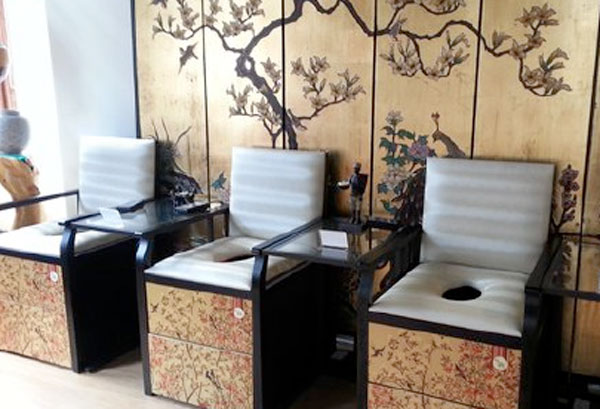
“The V-steam is the Americanized version of a centuries-old Korean tradition called chai-yok, during which women hover over a piping hot cauldron of Wormwood and Mugwort to be thoroughly cleansed from the inside out. Wormwood and Mugwort, which sounds like a class Neville Longbottom would excel in at Hogwarts, are actually herbs that have alleged antibiotic and antifungal properties, as well as healing powers. Basically, it’s sorcery for your vagina.”
“He is selling hope as a McDonald’s commercial, if McDonald’s sold DELUXE GOD MEALS. Sit there. Watch him. There are moments of transparent, theatrical pause: a deep sigh, a squint, like he is waiting for GOD Himself to transmit His word, and then GOD does, and Osteen has received it. He is so bewildered, he can’t believe it, its clarity and potency, and now he’s about to share it with you, folks, for the low-low price of $ETERNALDEVOTION.99.”
“[The study] found that it’s money, not marriage, that has the greater impact on parenting practices. This was particularly noticeable when it came to participation in extracurricular activities. “For example, the extracurricular participation in sports of children in families at 200 percent or more of the poverty level is 42.5 percent, while the participation of those in poverty is 22.5 percent, a difference of 20 percentage points…Most parents in all categories are conscientious parents who read to their kids, eat with their kids, and try to keep their kids engaged in activities besides TV-watching. But low-income parents often struggle to find the time, which suggests that more economic opportunities are needed to close up the gaps.”
A pair of Great Horned Owls live in a tree very near our master bedroom windows. I have never lived in a house before that had mature trees that owls enjoy so much. There is a large, dying tree in my neighbor’s backyard and I believe it is their nest. Their calls at night to each other, gorgeous sounding, make me smile and I always whisper to Wife, “Do you hear the owls?” In her half-sleep, she usually says, “Yes.”
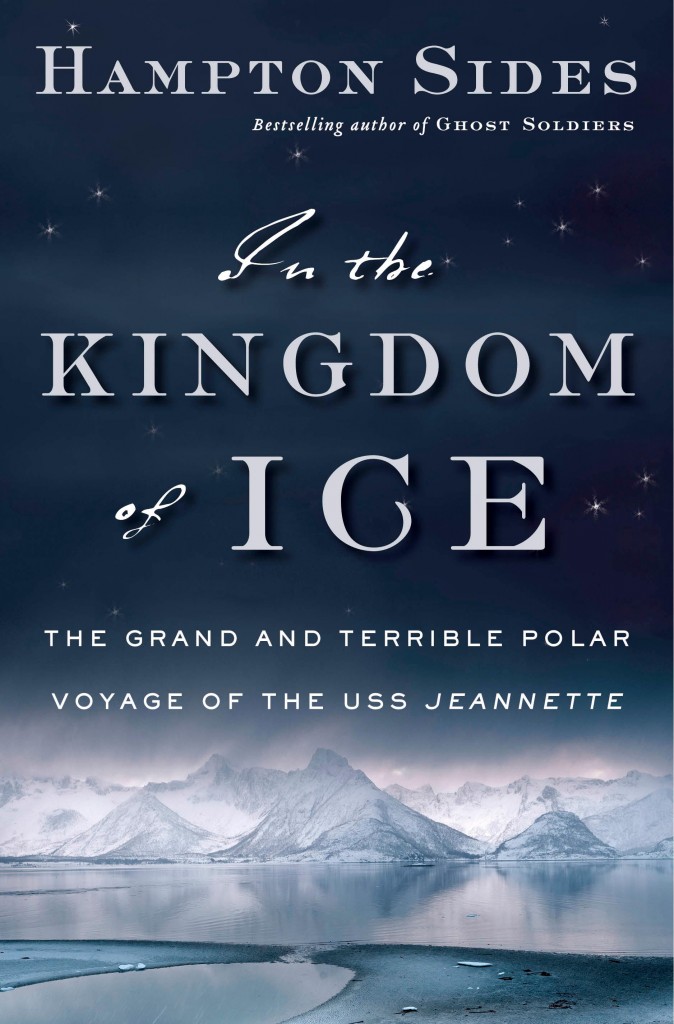
I’m a little behind on my reading, so I decided to churn through three quick titles by Sunday to get a little ahead. I have not finished “In The Kingdom of Ice” yet, but I am going to pick it back up Sunday.
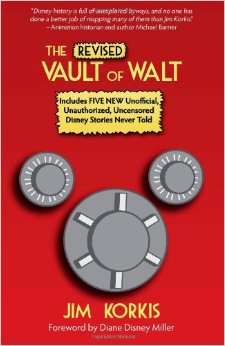
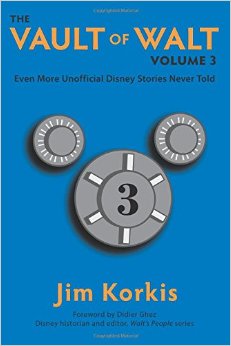
Vaults of Walt - Synopsis
Best-selling author Jim Korkis brings forth from his famous Vault of Walt stories about Disney films and theme parks, Disney stars and attractions, and of course, Walt himself.
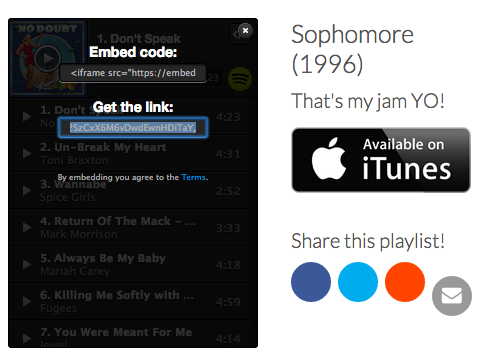
Retrojam generates a visual timeline of popular music from your childhood based on your birth date. The tracklists require Spotify, but initially I didn’t find that I could easily add the Playlists to Spotify. After modifying each link, I was able to do so and now have a Retrojam folder of yearly playlists from Birth to Senior Year. Here’s how I did it.
On the Playlist, select “Play All” at top right.
Click the share/embed button: “< / >”
Copy the full link to your address bar in a new tab.
Scrub the link in this area…
…until it looks similar to this.
Hit enter/return and the playlist should start playing in the Spotify Play Queue.
Create a new Playlist.
Then click on the Play Queue and copy the tracks to the new Playlist.
In the late nineteenth century, people were obsessed by one of the last unmapped areas of the globe: the North Pole…National glory would fall to whoever could plant his flag upon its shores. James Gordon Bennett…funded an official U.S. naval expedition to reach the Pole, choosing as its captain a young officer named George Washington De Long. De Long led a team of 32 men deep into uncharted Arctic waters, carrying the aspirations of a young country burning to become a world power. On July 8, 1879, the USS Jeannette set sail from San Francisco to cheering crowds in the grip of “Arctic Fever.” The ship sailed into uncharted seas, but soon was trapped in pack ice. Two years into the harrowing voyage, the hull was breached. Amid the rush of water and the shrieks of breaking wooden boards, the crew abandoned the ship. Less than an hour later, the Jeannette sank to the bottom, and the men found themselves marooned a thousand miles north of Siberia with only the barest supplies. Thus began their long march across the endless ice—a frozen hell in the most lonesome corner of the world. Facing everything from snow blindness and polar bears to ferocious storms and frosty labyrinths, the expedition battled madness and starvation as they desperately strove for survival. With twists and turns worthy of a thriller, In The Kingdom of Ice is a spellbinding tale of heroism and determination in the most unforgiving territory on Earth.
[collapse]
Non-fiction Adventure is my favorite genre of writing and I will be reading a lot of it this year. I also lean towards adventure retellings where something has gone tragically wrong (see: Into Thin Air, The Hot Zone, The Endurance, The Worst Hard Time). I’m also a huge of fan of true crime and may sprinkle a few in this year.
For my 35th birthday, I ordered myself a Kindle Voyage. It’s greatest advantage over the Paperwhite that I use now is the 300ppi which allows for better PDF support and will make reading graphic novels a better experience. I have been fantastically satisfied with my Paperwhite and I expect I will be very happy with the Voyage as well.
In this tender, bittersweet, full-color graphic novel, a young woman named Clementine discovers herself and the elusive magic of love when she meets a confident blue-haired girl named Emma: a lesbian love story for the ages that bristles with the energy of youth and rebellion and the eternal light of desire.
[collapse]
I saw the film before I read the book. Is that cheating?
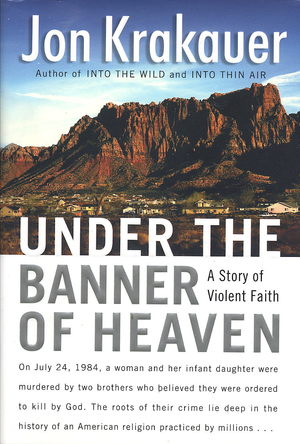
At the core of Krakauer’s book are brothers Ron and Dan Lafferty, who insist they received a commandment from God to kill a blameless woman and her baby girl. Beginning with a meticulously researched account of this appalling double murder, Krakauer constructs a multi-layered, bone-chilling narrative of messianic delusion, polygamy, savage violence, and unyielding faith. Along the way he uncovers a shadowy offshoot of America’s fastest growing religion, and raises provocative questions about the nature of religious belief.
[collapse]
I love Jon Krakauer’s writing style so much. His novel Into Thin Air is very high on my recommendation list.
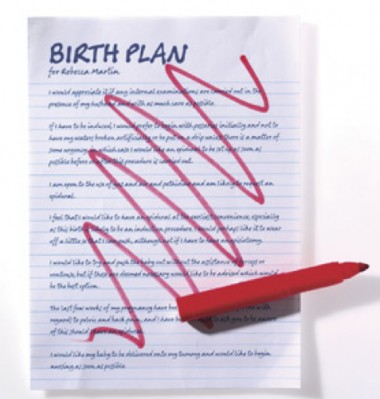
“Did you have a plan for your placenta?” the woman asked me earnestly.
“Huh? You mean did I, like, cook it or bury it in the garden?” She shook her head. “No, I mean when you gave birth did you have a plan for how your placenta would be delivered?”
Blink. “Um, out of my vagina? Does that count as a plan?”
More head shaking. The woman was growing impatient because she had a plan and she wanted to tell me about it. Her three page birth plan had “Delivering The Placenta” as its own subhead with half a dozen bullet points underneath.
I know this because she showed it to me on her phone while I tried not to stab myself with a sausage.
So what’s the problem with birth plans?
1. Most birth plans are filled with outdated and irrelevant preferences. As childbirth educator Tamara Kaufman writes in Evolution of the Birth Plan:
… [Women] identify the Internet as the resource they use most frequently to gather information about pregnancy, birth, and birth plans. A Google search of the term “birth plan” offers parents several choices of predesigned birth plans. However, many of the birth plans detailed on these sites are outdated. For example, several on-line, interactive tools start with questions regarding being shaved or receiving an enema. Because these procedures are no longer routine in most areas, such details may cause parents to devote too much attention to unimportant issues and cause the hospital staff to dismiss the couple as being uneducated regarding routine hospital procedures… On-line birth plans are frequently more than one page in length, which may inhibit the hospital staff from closely reading the plan. On-line birth plans also have a tendency to use phrases such as “unless absolutely or medically necessary”—a phrase that is not always useful when caregivers usually believe the intervention they recommend is medically necessary at the time…
From antenatal clinics in Sweden, 271 women were recruited after week 33 of pregnancy and given a questionnaire designed to assess their attitudes and feelings about the coming childbirth. Thereafter, they formulated a birth plan. The midwife in attendance at the birth was able to refer to this plan. Women who followed this program were compared with women from the same clinics who were asked to complete a questionnaire during the first postpartum week to assess their birth experience. A questionnaire at the end of pregnancy, followed by a birth plan, was not effective in improving women’s experiences of childbirth. In the birth plan group, women gave significantly lower scores for the relationship to the first midwife they met during delivery, with respect to listening and paying attention to needs and desires, support, guiding, and respect.
3. Most importantly, babies don’t read birth plans.
I asked my wife what her birth plan included and, chuckling, she said, “Do what the doctor recommends and have the baby.”


“The V-steam is the Americanized version of a centuries-old Korean tradition called chai-yok, during which women hover over a piping hot cauldron of Wormwood and Mugwort to be thoroughly cleansed from the inside out. Wormwood and Mugwort, which sounds like a class Neville Longbottom would excel in at Hogwarts, are actually herbs that have alleged antibiotic and antifungal properties, as well as healing powers. Basically, it’s sorcery for your vagina.”

“[The study] found that it’s money, not marriage, that has the greater impact on parenting practices. This was particularly noticeable when it came to participation in extracurricular activities. “For example, the extracurricular participation in sports of children in families at 200 percent or more of the poverty level is 42.5 percent, while the participation of those in poverty is 22.5 percent, a difference of 20 percentage points…Most parents in all categories are conscientious parents who read to their kids, eat with their kids, and try to keep their kids engaged in activities besides TV-watching. But low-income parents often struggle to find the time, which suggests that more economic opportunities are needed to close up the gaps.”